By Fr. Emeterio Barcelon, SJ
Why is the Church so interested in the RH Bill, a subject where priests are probably the least knowledgeable? The answer is conscience. The bishops and priests may not know as much as others do about sex and marriage but the question here is freedom of conscience. Are the proposals in the RH bills forcing the poor to submit to practices that go against their conscience? Are the medical workers to be forced to assist in abortion otherwise suffer consequences? The stipulations of the final bill are still anybody's guess. The caution is to make sure we do not trample on people's conscience.
Pres. Nonoy Aquino is not interested in destroying anybody's conscience. He wants to help those burdened with too many children. All he wants is responsible parenthood. Those who cannot abstain should learn licit ways to space birth. The government would help give proper information without pushing for any method of birth spacing. The couples have to decide for themselves. The government should not promote any system that would be against the conscience of the participant. The government should propagate information on natural family planning and other licit methods.
The Church has never had the policy of promoting over-population. The problem is poverty plus ignorance. (We have birth control promoters, especially foreigners who do not want to share the earth with the poor. As we have in the Kissinger memo that makes it US policy to cut population by whatever means. If it destroys the conscience of the poor in underdeveloped countries that should not stop population control because there are too many people on this earth and life should be enjoyed only by the rich and educated. Why should the earth be shared with the backward peoples? There are also those who profit on chemicals but not on teaching natural birth spacing who rail against the church for cutting their profits.)
Responsible parenthood is not an essential of our faith. Its forms are subject to change. But freedom of conscience is an essential of Faith. Man will be rewarded by the Creator for the good that he does and punished for the evil he has done. And therefore his freedom of choice according to his subjective conscience must remain inviolate. Freedom is the most precious gift man has. It is greater than life itself. Many have given up life to protect this fundamental freedom to accept or reject God. All other freedoms exist only to support this fundamental freedom: to accept or not to accept God or to do or not to do His will. What His will is can sometimes be unclear and may take a lot of effort to ferret out. But that is the only purpose of man, namely, to exercise his freedom to accept God.
We will be judged by the Almighty according to our subjective conscience. In moral theology, if a person thinks that two sticks form a cross and it is a sin to step on it and he does step on it, he violates his conscience and will be punished for it. If a can nibal thinks it is right to eat another human being and he feasts on one, he will be rewarded for doing what he thinks is right, although objectively it is wrong. What is left to do is to educate the individual to a right conscience of what is right and what is wrong. This can be affected heavily by the culture in which a man lives and the education that he gets. In the end, it is a question of justice, namely, to give to others what is their due. Give to God what is due to God and to fellow man what is due to him. Put in other words, it is to love God above all things and to love our neighbor as ourselves. All other things of justice and morality end up in this. But in the weakness or perversion of man, he sometimes goes against his conscience or hides behind legalities. Are we really giving justice to the poor and protecting his freedom or hiding behind trappings of law?

Monday, November 29, 2010

Thursday, November 25, 2010
When does life begin? RH debate rages
By Niña Corpuz
When does life begin?
Bacolod Rep. Anthony Golez Jr. tried to answer this question Wednesday at the Talakayan sa Bayan debates on the reproductive health (RH) issue at the Unibersidad ng Maynila.
Golez, who is also a doctor of medicine, is against the RH bills in Congress.
He is on the side of the Catholic Church and Bishop Emeritus of Novaliches Teodoro Bacani, who also attended the forum.
Former Akbayan Rep. Rissa Hontiveros-Baraquel was on the other side of the fence at the debate.
'Pills are abortifacents'
Golez gave a presentation on why modern contraceptives like pills and intrauterine devices are abortifacients or cause abortions.
He believes that life begins at fertilization, the same view as the Catholic Church as expressed by Bacani.
Golez said that he is not against the objectives of the RH bills, such as for parents to have the opportunity to plan the spacing of their children, and promoting infant and maternal health,
"Pero ang hindi sinasabi ng RH bill ay ang ibinibigay na serbisyo dito ay abortifacient,” he added.
Using a picture of a woman's reproductive organs, Golez said life begins during fertilization. He said this is when the egg and sperm meet in the ovary. After 6 or 7 days, the fertilized egg will travel to the uterus where it will be implanted.

When does life begin?
The debate now is when does life begin? During fertilization or implantation?
When IUD is used and placed in the uterus, it alters the uterine lining and makes the uterus not suitable for implantation, Golez said.
"Di siya ma-implant sa uterus, nasira ang fertilized egg, abortifacient di ba?” he explained.
Pills may also be abortifacient, according to the lawmaker.
Pills have 3 modes of actions – prevent ovulation, thicken cervical mucus, and alter uterine lining.
The first 2 actions are not abortifacient but the third action is, according to Golez.
"Pills have a failure rate of less than 10%, kahit uminom ka ng pills, may chance na mag-ovulate ka pa rin,” said Golez.
For Golez, life begins during fertilization. "That's my stand as a Catholic doctor."
RH bills do not legalize abortion
Hontiveros-Baraquel, meanwhile, clarified that the RH bills in Congress do not legalize abortion. "Nananatili syang krimen".
She insisted that modern methods of family planning are not abortifacient. "We want to give couples a choice, kung natural or modern".
Golez, however, wants the government to first answer the question: When does life begin?
Golez said under the constitution, the state must protect life at the moment of conception. "Kailan ba nabubuhay ang isang tao? Define when life begins. Pag na-define natin yan, tsaka natin pag-usapan ang RH bill."
However, Hontiveros-Baraquel said, "Matagal ng dine-debate yan, centuries na yan. In the meantime, mahigit 18 years na pinag-uusapan ang RH bill. Masyado nang delayed. Bigyan natin ng choice ang tao."
Bacani, meanwhile, said that the church is not against reproductive health bills because they agree with the objectives.
"Hindi yung buong RH bill ang abortifacient. Don't get us wrong, the church is for responsible parenthood and family planning."
When does life begin?
Bacolod Rep. Anthony Golez Jr. tried to answer this question Wednesday at the Talakayan sa Bayan debates on the reproductive health (RH) issue at the Unibersidad ng Maynila.
Golez, who is also a doctor of medicine, is against the RH bills in Congress.
He is on the side of the Catholic Church and Bishop Emeritus of Novaliches Teodoro Bacani, who also attended the forum.
Former Akbayan Rep. Rissa Hontiveros-Baraquel was on the other side of the fence at the debate.
'Pills are abortifacents'
Golez gave a presentation on why modern contraceptives like pills and intrauterine devices are abortifacients or cause abortions.
He believes that life begins at fertilization, the same view as the Catholic Church as expressed by Bacani.
Golez said that he is not against the objectives of the RH bills, such as for parents to have the opportunity to plan the spacing of their children, and promoting infant and maternal health,
"Pero ang hindi sinasabi ng RH bill ay ang ibinibigay na serbisyo dito ay abortifacient,” he added.
Using a picture of a woman's reproductive organs, Golez said life begins during fertilization. He said this is when the egg and sperm meet in the ovary. After 6 or 7 days, the fertilized egg will travel to the uterus where it will be implanted.
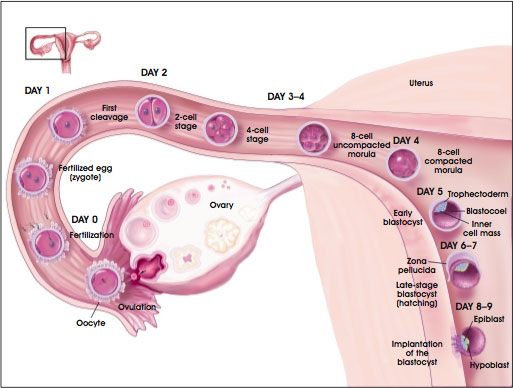
When does life begin?
The debate now is when does life begin? During fertilization or implantation?
When IUD is used and placed in the uterus, it alters the uterine lining and makes the uterus not suitable for implantation, Golez said.
"Di siya ma-implant sa uterus, nasira ang fertilized egg, abortifacient di ba?” he explained.
Pills may also be abortifacient, according to the lawmaker.
Pills have 3 modes of actions – prevent ovulation, thicken cervical mucus, and alter uterine lining.
The first 2 actions are not abortifacient but the third action is, according to Golez.
"Pills have a failure rate of less than 10%, kahit uminom ka ng pills, may chance na mag-ovulate ka pa rin,” said Golez.
For Golez, life begins during fertilization. "That's my stand as a Catholic doctor."
RH bills do not legalize abortion
Hontiveros-Baraquel, meanwhile, clarified that the RH bills in Congress do not legalize abortion. "Nananatili syang krimen".
She insisted that modern methods of family planning are not abortifacient. "We want to give couples a choice, kung natural or modern".
Golez, however, wants the government to first answer the question: When does life begin?
Golez said under the constitution, the state must protect life at the moment of conception. "Kailan ba nabubuhay ang isang tao? Define when life begins. Pag na-define natin yan, tsaka natin pag-usapan ang RH bill."
However, Hontiveros-Baraquel said, "Matagal ng dine-debate yan, centuries na yan. In the meantime, mahigit 18 years na pinag-uusapan ang RH bill. Masyado nang delayed. Bigyan natin ng choice ang tao."
Bacani, meanwhile, said that the church is not against reproductive health bills because they agree with the objectives.
"Hindi yung buong RH bill ang abortifacient. Don't get us wrong, the church is for responsible parenthood and family planning."
Thursday, October 28, 2010
Population Bogey: a scapegoat
By Sonny Coloma
In the fifties and up to the time martial rule was imposed by a dictatorial President, the
communist bogey was the favorite justification for witch-hunting against advocates of
progressive thought who were accused of "destabilizing" the government and "threatening
our democratic way of life." Today, the communist bogey has been replaced by a new
scapegoat: the population bogey.
House Bill 5043, otherwise known as the Population and Reproductive Health Bill, is now
being debated. Even if the bill has not been passed it has been reported that about P2 billion has been appropriated to fund the purchase and provision of contraceptives that will be distributed in health centers nationwide.
I first became aware of the population bogey when, as a freshman in UP, I read the winning piece for the Philippine Collegian editorship written by Antonio Tagamolila. (Government soldiers in the coutnryside killed Tony Tagamolila in the early seventies, not long after his stint as Collegian editor.) His lead sentence was quite memorable: “The ghost of the Parson Malthus once more stalks the land.”

Thomas Malthus was a Protestant minister who warned about the potentially catastrophic
consequences of “geometric” (or “exponential”) population growth far outstripping “arithmetic” growth in food production. This view found resonance in the Club of Rome’s
exposition on the Limits to Growth in the mid-seventies.
But such gloom-and-doom scenarios have not materialized. Advances in technology have greatly enhanced human productivity. The market economy has created such an abundance of wealth that, even if not equitably distributed, has forestalled the dire predictions on the supposed detrimental effects of the law of diminishing marginal returns.
Poverty cannot be totally blamed on the poor themselves: it is more clearly the outcome of
human greed and bad governance. In the Real Wealth of Nations, Riane Eisler points out that it is dominator economic systems that “artificially create and perpetuate scarcity – and with this, pain and fear.” Such systems have spawned “heavy investment in armaments, lack of
investment in meeting human needs, ruthless exploitation of nature, and waste of natural and human resources from wars and other forms of violence.”
In our country, the Catholic Church has often been blamed by politicians for the continuing high population growth rate. I recall that during the Ramos regime, Cardinal Sin mobilized a huge rally in Luneta to counteract the high-profile birth control program of the Department of Health that was then headed by flamboyant Secretary (later Senator) Juan Flavier.
During my two stints in government, I have realized why every secretary of health is bound
to support the use of contraceptives in population control programs. Almost the entire DOH
budget (up to 80%) is allocated for personnel salaries and administrative expenses. Only
official development assistance from such sources as the US Agency for International
Development (USAID) makes it possible for the DOH to pursue meaningful pubic health
programs.
I am opposed to HB 5043 even if I favor planned parenthood through natural methods. My
opposition stems from the fact that, historically, the open tolerance of the use of
contraceptives has produced more harmful effects than the good that its advocates have
vowed to promote.
A culture of contraception is, essentially, an anti-life – not a pro-choice — culture. It is also
anti-family.
Contrary to expectations, the percentage of out-of wedlock births has increased dramatically since oral contraceptives, or birth control pills, were approved for sale in 1960. In the US out-of-wedlock births have increased from 6% to about 35%. In Europe, about half of the children in Denmark, Sweden, and Norway are born to unmarried mothers.
These figures give rise to the query: since birth control pills prevent pregnancy, shouldn’t
the out-of-wedlock pregnancy rates have gone down? Not so, because of the operation of the law of unintended consequences. Since contraception has become legitimate, then child-bearing can take place outside marriage. Hence, there has been a big increase in the out-of-wedlock pregnancies – and births – and of abortions as well. With few exceptions, abortions always happen outside of marriage.
Another consequence of the onset of the culture of contraception is the spiral in the incidence of divorce and a corresponding decline of marriage as an institution.
Let the authors of the House Bill explain and justify to the people the rationale in terms of the foregoing challenges: the likely increase in unwanted pregnancies and criminal abortions,
out-of-wedlock births, and the decline of marriage. Let them file a divorce law to complete
their menu for the new Filipino lifestyle.
But let the silent majority of those who are opposed to abortion and the decline of the family
as an institution also speak up.
Not surprisingly, none of the presidential wannabees for 2010 has spoken in favor of HB
5043, which still needs a Senate counterpart measure that is yet to be reported out and
debated on the floor.
Catholics should come out in the open and ask their senators, congressmen, and political
leaders to declare where they stand on this issue.
Monday, October 25, 2010
Falsehoods in the Lagman Bill
At the Congress Night of the Manila Overseas Press Club, when Speaker Prospero Nograles was asked what he thought of the Reproductive Health bill of Bicol Rep. Edcel Lagman, the Speaker gave the floor to Lagman, who perorated on his bill espousing contraception to control population growth and the need for the people to be aware of their choices in planning their families.
The premise of the highly debated proposed Reproductive Health and Population Development Act of 2008, according to Lagman, is that the booming population has worsened poverty. He anchored his contraception bill on the findings of some 29 UP economists, who claimed that population growth over the years would worsen poverty unless population is contained. Ergo, contraception is the answer.
Lagman seems to put too much weight on what UP economists say. He forgets that economists make conclusions on assumptions and other factors, which are not validated, much less proven. Show me an economist that has become a billionaire because of assumptions and conclusions, and I’ll show you a pig that can fly.
At the risk of repeating myself, there’s no empirical data that shows that overpopulation causes poverty. Poverty is the result of confluence of factors, like bad governance, graft and corruption (benefits don’t go to the bulk of the populace, but to the pockets of grafters and corrupt public officials) and unmitigated migration from the provinces to urban areas. The existence of squatter colonies in Metro Manila attests to this.
 | |||
The flawed premise of Lagman’s bill is in empirical data like figures from the National Statistics Office, which show that our population growth rate is 2.04 percent, and total fertility rate is 3.02 percent. The CIA World Fact Book has lower figures of growth rate, 1.728 percent; TFR, 3.00 percent. Our population density is 277 per square km. gross domestic product per capita is $3.400. According to a study made by former Senator Kit Tatad, 50 other countries have a much lower density, yet their per capita is much lower. Thirty six countries, Tatad stated, are more densely populated, yet their GDP per capita is also much higher. Kit asked: Are the few then always richer, the many always poorer? Not at all.
Empirical data also show our median age is 23 years. In 139 other countries, it is as high as 45.5 years (Monaco). This means a Filipino has more productive years ahead of him than his counterpart in the rich countries where the graying and dying population is no longer being replaced because of negative birth rates.
Lagman and his anti-life lobbyists must be told that the city-state of Singapore is now in full reverse after undertaking a policy of population control. The Singapore government is in fact encouraging couples to marry and even providing incentives. There’s a joke in the welfare state of Finland that’s controlling its population growth that by 2050, there will only be two Finns left, and that they don’t know whether or not they will be of opposite sexes.
Santa Banana, Lagman’s bill is not only jurassic and archaic, but against empirical data! It’s fraught with lies and fallacies!
PHOTO: immigrant family from China in Singapore circa 1958, from Elaine Sng.
Sunday, October 24, 2010
Retire the Reproductive Health Bill
Thursday, October 30, 2008
House Bill No. 5043 is titled “An Act Providing For National Policy On Reproductive Health, Responsible Parenthood and Population Development and For Other Purposes.” Until it reached the floor for debate, I had thought it sufficient to dwell simply on the general principles of legislation and the basic provisions of the Constitution on human life, family and marriage to show that the bill has no place in our law.
 The first point I tried to make is that there are certain activities of man as man, which are not subject to state regulation of any sort. These involve fundamental human rights that precede and transcend the State, such as the right to breathe, the right to think, the right to feel, the right to love, the right to hope, the right to believe.
The State has no business instructing the citizen, by law, how to breathe, how to think, how to feel, how to love, how to hope, how to believe. Under our Constitution, it may not even instruct congressmen how to interpellate, journalists how to write, broadcasters how to read the news.
Anyone who understands what has been said so far should have no difficulty understanding that the State has no business instructing married couples that they should first contracept or get themselves sterilized before they could engage in sexual intercourse.
The bill’s proponents seem completely unable or unwilling to grasp this rather plain and simple point. They seem to believe that they can legislate anything they want to legislate simply because they sit in Congress. This is a serious moral and intellectual disorder which finds support only in totalitarian states where the legislator need not sit in Congress. We are not yet a totalitarian state.
The second point I tried to make is that no proposed statute can possibly prosper which seeks to amend, or go around or against the Constitution outside of the constitutional amendatory process. And HB 5043 more than amply does this.
Article II, Section 12 of the Constitution is, or ought to be, a sufficient bar to HB 5043. “The State recognizes the sanctity of family life and shall protect and strengthen the family as a basic autonomous social institution. It shall equally protect the life of the mother and the life of the unborn from conception. The natural and primary right and duty of parents in the rearing of the youth for civic efficiency and the development of moral character shall receive the support of the Government.”
The provision, though not self-enforcing, needs no interpretation. Family life is sacred; it possesses a quality that belongs primarily to God. The family is the starting point of society and should be left alone to do its work as a family; the State’s duty is to protect it against all threats, including those coming from the State itself. The moral character of the youth is not likely to be developed by concentrating their minds on hedonistic sex.
By this provision, the Constitution bans abortion, but not contraception or sterilization. But can the State be an honest protector of the life of the mother and the life of the unborn from the moment of conception if its first business is to prevent women from conceiving? Of course, not. So the necessary implication of Sec. 12, Article II is a ban on state-sponsored or state-mediated contraception and sterilization, even though there is no such ban on private parties.
Even without the above provision, the whole Article XV on “The Family” should suffice. This recognizes marriage as “an inviolable social institution,”“the foundation of the family,” which shall be “protected by the State.” It further recognizes the Filipino family as the “foundation of the nation” and obliges the State to “strengthen its solidarity and actively promote its total development.” It further obliges the State to defend “the right of spouses to found a family according to their religious convictions and the demands of responsible parenthood.”
Unless the Constitution has become a mere scrap of paper, these provisions should have barred the House of Representatives from approving HB 5043 at committee level. Even if all the economic justifications, which had been thoroughly discredited, had more teeth, the moral and constitutional bar, which the bill has failed to hurdle, should have prompted the committees to send it to the archives.
But there was a brazen attempt to steamroll the bill. Four reproductive health bills had been referred jointly to the House committees on health and on population and family relations. On April 29, 2008, the committees heard three of the four bills. They set a second hearing for May 21, 2008. But when the committees met on that date, the presiding officer announced that they would now deliberate on “the substitute bill” to the four bills. And on one member’s motion, the committees approved “the substitute bill.” No further hearing.
This was in violation of the constitutional provision, and a rule of the House, which mandate adequate consultations with families or family associations. The statement that the same bill had been heard in previous congresses, even if true, is irrelevant and immaterial, since all bills that fail to be acted upon by a particular congress die at the end of that congress. If any bill be refiled in a new congress, it should go through the legislative mill as though it was being filed for the first time.
Nowhere in the records does it appear that the joint committees ever instructed any officer or group of officers to consolidate the bills into one. The chair’s statement and the member’s motion spoke of “the substitute bill” as already in being, without need of a motion that it first be created.
Normally, bills are consolidated by a technical working group (TWG) created by the committee or joint committees upon a member’s motion to consolidate. There was no such motion, and no TWG was ever created. Where then did the substitute bill emanate?
Upon interpellation, the sponsor, who surprisingly is not the committee chair endorsing the bill, but rather the principal author himself, was reported to have said that the authors of the four component bills did it.
If true, it was highly irregular. Why? Because at that stage the bills were already under the joint committees’ jurisdiction and control, and nothing on record shows they had asked the authors to consolidate.
If false, which seems more likely, a serious ethical question arises, which completely vitiates the integrity of the proceedings, and which must be resolved by the House ethics committee, before which it should now be raised.
This is not a trifling technicality. There is loud talk in the House that the substitute bill, as well as the original component bills, was produced by a foreign-funded non-government entity, called the Philippine Legislators Committee on Population and Development (PLCPD). PLCPD falls under the classification of “foreign agent,” according to the Foreign Agents Act of 1979, which I had the honor of initiating at the interim Batasang Pambansa.
The fact that all the reproductive health bills in the House and the Senate tend to read and sound alike, both in style and in content, and that PLCPD had been running ads urging passage of the bill, while David and Lucile Packard Foundation, one of its foreign funders, had criticized the government for the slowdown in its purchase of contraceptives, seem to provide more than ample basis for the loud talk in the House.
What foreign interests are behind the wild and moneyed push for this bill? Why are so many foreign-funded NGOs, featuring brand and customary “nationalists”, trying to ride roughshod over the Constitution and Catholic objections to it on moral and constitutional grounds?
 The answer may be downloaded on the internet. Population control has a long history. It began in antiquity, but it became an invasive global political force in 1974 after Henry Kissinger came up with National Security Study Memorandum (NSSM) 200, titled “Implications of Worldwide Population Growth for US Security and Overseas Interests.”
This secret document created the template for the global population action plan that called for a two-child family worldwide by the year 2000. Since then the greying and dying of the population of the West has exposed the folly of this plan. But some people still want to dance the dance. Just who are making them dance?
Regardless of the motives and agendas imbedded in HB 5043, as a piece of legislation, it is shot through with holes. It cannot survive an honest House. As stated in the beginning, the bill is titled, “An Act Providing For A National Policy On Reproductive Health, Responsible Parenthood and Population Development, And For Other Purposes.”
The Constitution provides that “every bill passed by the Congress shall embrace only one subject which shall be expressed in the title thereof.” The bill’s failure to reflect its penal nature is a constitutional violation; the fact that it contains three separate subjects – reproductive health, responsible parenthood, and population development -- which it tries, unsuccessfully, to link together, is another.
But the bill’s most obvious and ultimately insurmountable defect is that it seeks to “provide” a national policy where the Constitution already provides one. You read this in Article II, Declaration of Principles and State Policies, eloquently spread out from Section 9 to Sec. 18 or further.
Congress can only implement the policy laid out in the Constitution. It cannot hope to replace or revise it. Of course, one may now try to amend the title to say that the bill is “implementing” the constitutional policy rather than trying to provide a new one. That, however, cannot stand. The contents of HB 5043 do not at all reflect the substance of the constitutional policy; they rather seek to deny, assault and pervert the same.
One final point. Assume (arguendo) that the constitutional policy did not at all exist, the government’s contraceptives and sterilization program – illegal as it is – already exists. You only need to play back then Health Secretary Johnny Flavier’s proud boast before his NGO crowd at the 1994 International Conference on Population and Development in Cairo to confirm it. The fat outlays inserted in the present and next year’s budgets for reproductive health further confirm it.
After all is said and done, is HB 5043 not, in fact, an attempt to legalize an illegal program that has been there for years?
Thursday, October 21, 2010
Philippines Threatened By a 2-Child Policy
By Genevieve Pollock
Filipino-Americans are joining with Catholics from their native country to fight proposed legislation that would promote contraception and limit family size, while punishing conscientious objectors.

The newly consolidated Reproductive Health Bill of 2005, renamed "An Act Providing for a National Policy on Reproductive Health, Responsible Parenthood and Population Development, and for Other Purposes," was put on the floor of Congress last week to begin plenary debates, reported the Washington-based Filipino Family Fund.
At the close of the week, the debates were temporarily suspended, but are due to resume soon. Pro-life groups are holding vigils outside of the House of Representatives in order to closely monitor the proceedings of the bill.
After the original reproductive health bill's failure to pass in 2005, the new Congress reconvened, introduced three new bills, consolidated them into the current proposal, and put the new bill through the Committee on Population without due process in May of 2008.
The Philippine Legislator Committee on Population and Development (PLCPD) has worked with International Planned Parenthood and the U.N. Population Fund in the creation of this legislation that aims to depopulate the country through all possible means and decrease HIV/AIDS or other sexually transmitted diseases. The U.N. fund has appropriated $26 million to the Philippines for this purpose.
This bill would mandate an "ideal family size," setting the stage for a proposed Two-Child Policy. It foresees stiff penalties that include up to six months imprisonment and heavy fines for those who do not comply with the proposed reproductive health care agenda.
According to the bill, these penalties could even apply to any person "who maliciously engages in disinformation about the intent or provisions of this act."
Provisions of the bill call for a network of doctors, population officers in every province, and a national curriculum that will teach secular sex education to fifth graders.
Silencing parents
Eileen Macapanas Cosby, president of the Filipino Family Fund, told ZENIT that "freedom of speech is at stake. Parents will not be able to object. Health care workers will be forced to refer against their conscience. Employers will have to provide family planning services."
"International Planned Parenthood has sold false presuppositions that access to contraception will alleviate poverty, and decrease the number of abortions. Many who do not have an understanding of Catholic social teachings have bought this," explained Cosby. "Precisely because the country is Catholic, [Planned Parenthood] has targeted the Philippines."
Cosby noted the affirmation of Archbishop Pacino Aniceto, chairman of the episcopal commission on family and life, who stated "If you are Catholic, you should behave like a Catholic. Otherwise you are not what you profess."
Filipino bishops are sponsoring an advocacy movement against the passage of the bill. They note that a contraception bill with necessarily include abortion.
Archbishop Oscar Cruz of Lingayen-Dagupan affirmed on his blog, "It is not hard to see that the title of the bill alone says many words yet its open-ended phrase ‘for other purposes' suggests its hardly realized humungous price tag and grave moral costs."
Rest of Asia
Filipino Catholics plan to gather 1 million signatures against the reproductive health bill to present to Congress. Father Melvin Castro, secretariat of the Pro-life Office of the bishops' conference reported that he had collected 100,000 signatures of constituents by last week.
The Filipino Family Fund is urging people to sign the petition on their Web site.
"We have to defend the Church now or the rest of Asia will be at stake," said Cosby.
In return for the foreign funding promised by Planned Parenthood and the United Nations, the Philippines will be losing moral ground, Cosby told ZENIT. Our stance is to remain vigilant now, as the debates are set to resume soon, she added.
"The truth of the matter is, that the bill will lead to the implementation of an immoral policy -- a proposed synthetic artificial contraceptives eventually designed to ruin health as it slants the idea of responsible parenthood to issues of depopulation, which proponents claim will result to progress among underdeveloped countries like ours," Archbishop Cruz wrote on his blog. "After all, no human act, no legislative bill, no executive function, no judicial work is over and above morality.
"Morality is neither irrelevant in politics, not indifferent in a secular society. Irrespective of the race, color and creed of those concerned, the moment individuals fool around with private morals, the moment the government disregards public morals, then the families and country are in big trouble respectively. This is the standing lesson of history."
Note: The author is Assistant Editor of ZENIT, an international news agency that aims to inform about topics, debates and events that are especially interesting to Christians worldwide. It was published on Sept. 21, 2008.
Photo: From the website of Kevin Nadal, Ph.D.
Sunday, October 17, 2010
Unhealthy reproductive bill
(Opponents of the Reproductive Health Bill fought tooth and nail against its passing in 2008 causing President Arroyo to withdraw support. This article which came out on October 11 and 17, 2008 at the Business World, among others, admonished her not to pass the bill. Would President Noynoy whose presidency assumes moral ascendancy kowtow to the proponents of the bill? - The Bagman)
The "conscience" theme has never left local advertisements. The story line in many television ads about a woman talking to her inner voice or conscience in deciding what better soap or product to buy for her family never fails to amuse us for decades. The conscience advises the woman what product is good for her family and what will be beneficial to her in the long run. It teaches her to distinguish right from wrong. Her conscience guides her and warns her to act only in accordance with her own standards of right and wrong.

I guess the current debate on House Bill 5043, or the “Reproductive Health Bill,“ involves at the very least an exercise of conscience as well. I tried to read through its provisions, attempting somehow though probably failing at times to momentarily set aside tenets that have been taught to me as a Roman Catholic. Well my conscience did not stop pricking me as I look at its contents.
For a bill that unavoidably deals on moral issues, more specifically gender equality, responsible parenthood, family planning and abortion, it miserably failed to include in its declaration of policy and guiding principles any reference to our “Almighty God,” which point is clearly so emphasized in the preamble of our Constitution.
The bill is nothing but ambitious as it seeks to envelop at the same time in such a short single initiative a handful of differing and complicated subjects revolving around population, women’s rights, health promotion, gender equality and human rights. Empirically such a hodgepodge bill will undoubtedly lead to more explanations and oversight confusion in the future. “The simpler, the better” should be the rule.
The bill for all its good intentions made sweeping assumptions in an effort to push for what is referred to as “responsible parenthood.” Section 5 of the bill makes the Commission on Population (Popcom) the central planning and implementing body for the reproductive health policy. With Popcom at the helm, the bill apparently highlights the view that curbing the population is its main thrust. In its guiding principles (Section 3 (e)), the bill mentions “the limited resources of the country” affected by a “burgeoning multitude” that results in grossly inadequate and meaningless allocations. In effect, it perceives population in the country a “problem” that must be solved as it depletes its resources. But isn’t manpower the most important resource a country can ever have? Isn’t labor, more so an intelligent and productive one, the key to enhancing and maximizing resources, thus making resources bountiful and limitless rather than limited? Have our representatives failed to see the obvious by ignoring the continuing calls of developed countries for millions of migrants to work in their businesses and efforts to replace their graying population? The bill’s proponents if they truly believe in its importance, should work on other arguments and cease harping on the population growth. This type of reasoning has been shown to be false, misleading, obsolete, and very far from reality. Increasingly, Section 10 of the bill treats contraception as “essential medicines.” Categorizing contraceptives as such would imply that conception, which contraceptives seek to present, is a disease that requires medicines.
Under Section 12 of the bill mandatory reproductive health education shall begin from Grade 3 up fourth year high school or for six continuous years from the time child is 11 years old up to the time he or she reaches 17 years of age. What will that make of them? Sex specialists or adventurists perhaps?
Section 17 on the mandatory inclusions of free delivery by employers of a reasonable quantity of reproductive health care services, supplies and devices to all their workers under the collective bargaining agreement, is another awkward scheme to allow government to irregularly and unduly interfere in the relationship between employers and their employees and to violate the employer’s free exercise of religion. Freedom to exercise one’s religion is also infringed under Section 21 which considers as criminals the act of any health care service provider, whether public or private, to refuse to perform voluntary ligation and vasectomy and other legal and medically safe reproductive health care services.
In the end, notwithstanding the long arguments raised by the bill’s proponents, they all would have to contend with their own conscience and examine themselves if indeed, the bill’s provision to which they adhere do not get entangled with their moral judgment. I’m not even talking of religion here. For conscience, is in a way above reason and discussion. It operates without the influence of any teaching ideology, or tradition, and comes as an automatic command whether to the young or to the old, the educated or the uneducated. It warns and it judges.
Part II
Last Sunday was another day of sermon criticizing House Bill 5043 or the Reproductive Health Bill. The priest who was giving a discourse on the subject kept exhorting on how the bill would violate the laws of men and of God. The problem, though, is, like some who would condemn the bill outright, the clergyman did not point out the specific provisions of the bill that he found objectionable.
By coming up with sweeping statements and conclusions without laying the predicate, so to speak, he may have succeeded in convincing the devout churchgoers to disagree with the bill, but he definitely failed to make them informed and critical faithful followers who can ably defend their position when confronted by those who support the bill.
Through this and last week’s columns, we hope to assist those who wish to know more about the bill and some of its damaging provisions.
Stupid is as stupid does. That’s how Section 17 or the penal provision of the bill really is. It may be likened to the state-sponsored persecution by the Romans of the Christians for simply exercising their rights religious belief. It criminalizes acts that are morally right and fosters state initiatives that would infringe the Bill of Rights. Penalties imposed by the bill range from one month to six months imprisonment or a fine of P10,000.00 to P50,000.00. Violators are also civilly liable to the so-called “offended party” upon the discretion of the court. Under Section 17, regardless of their moral and ethical convictions, public and private health care service providers cannot knowingly withhold or impede the dissemination of information regarding programs and services on reproductive health., including the right to informed choice and access to a full range of medically-safe and effective family planning methods. They also can neither fail to provide reproductive health care services nor refuse to extend the same on account of the patient’s civil status, gender or sexual orientation, age, religion, personal circumstances, and nature of work. Worse, they cannot refuse to provide such services to a DSWD-certified abused minor or abused pregnant minor on whose case no parental consent is necessary.
True, Section 17, also mentions “that all conscientious objections of health care service providers based on religious grounds shall be respected”. But then, why is the said proviso inserted only in one of Section 17’s subparagraph s and not crafted separately so as to apply to all paragraphs of the section? And yes, why is it that conscientious objections based on religious grounds are the only ones respected? What if the objections emanate from moral, logical or philosophical underpinnings? Will they be disregarded?
One thing that well need to be reminded about this bill is the inevitable fact that all money to be utilized to provide those reproductive health and family planning services (many of which we cannot stomach) as well as to “urgently” promote them (Section 19 so says) will come from our very own pockets. Taxpayers money, we call it. We, the taxpayers, will foot the “bill” even if we find the bill repulsive and even if we know that our money would be put to better use with the building of well equipped hospitals and health centers. If this is not dumb, I don’t know what is.
Our definite way of ending this long and costly argument on Bill 5043 is for President Arroyo to finally and resolutely make a pronouncement that she will not support it and will veto it if and when it reaches Malacañang. The President may have compromised her principles on many issues, but this is one situation I hope where she will neither back down nor surrender her values for the sake of her own redemption, political or otherwise. Remember, Madam President, we are not the only ones watching you. He too is---- always.
Atty. Augusto R. Bundang is a Partner and Head of the Litigation Departmen of SapaloVelez Bundang and Bulilan Law Offices. He is a holder of a Bachelor of Arts Degree, major in Economics and Bachelor of Laws Degree from the Ateneo de Manila University. He has been engaged in active general litigation, licensing, corporate and intellectual property practice for more than fifteen (15) years and a columnist of a leading national newspaper, Business World.
Friday, October 15, 2010
Crucial questions on the RH bill
By Jose C. Sison
House Bill 5043 or The Reproductive Health, Responsible Parenthood and Population Development Act of 2008 (RH bill) is being propagated in mass media as promoting programs that will benefit women’s reproductive health by offering to millions of poor women the right to choose between natural and artificial birth control methods and by providing access to artificial contraceptives. According to the proponents and their mass media supporters, this a right choice offered by the bill to women who most need the information for family planning. In pushing for the bill they even attack the Catholic Church for blocking it by using religion to dictate national policy and for depriving the faithful of their free will.
The power to choose freely however must be exercised for the common good. It does not give man the right to choose and commit something wrong. In blocking the bill, the Church is just trying to point out what is wrong with it. Ironically, it is the bill itself that prevents the exercise of the free will by employing coercive methods in limiting the family size. It imposes imprisonment and or fine or both on those who would violate or refuse to carry out its program on providing access to the artificial methods of birth control.
Actually, it is not the lawmakers sponsoring the bill but an NGO called the Philippine Legislative Committee on Population and Development (PLCPD) that is responsible for drafting it. PLCPD is a foundation housed in Congress that lobbies and acts on behalf of, and enormously funded by foreign interest groups and foreign governments out to promote through coercion and deception a population control program that is anti-life and anti-family. From 1998, this kind of bills has been introduced in both Houses of Congress and lately has penetrated our legislative system down to the local level. Over the years because of objections, the versions have changed so that various provisions have been disguised under seemingly good intentions but ultimately have dire consequences on individuals, the family and society.
 The bill uses such terms as “women’s rights”, “right to health”, reproductive rights”, “reproductive education”, “fertility regulation”, “family planning” “satisfying and safe sex” so that people may eventually accept these terms to mean something good. Its very title “Reproductive Health” is a misnomer because in the UN language the term is taken to mean universal access to abortion, while Population Development is a euphemism for Population Control. Its proponents and supporters have even redefined the word “conception” or the start of life in order to prove that some artificial contraceptives to be offered by the government are not abortifacients.
But whether abortifacients or not, the plain truth is that in every country where contraceptives became widely available, abortions increased because women still get pregnant unexpectedly. When they acquire the mentality that a new birth is unwanted, they turn to abortion as a back up for contraceptive failure. The best example here is USA where 54% of women who had an abortion were using contraceptives when they became pregnant and where one in three women has had at least one abortion in their lifetime. This unfortunate US situation is best described by its Supreme Court which said that: “In some critical respects abortion is of the same character as the decision to use contraception. For two decades of economic and social development, people have organized intimate relationships and made choices that define their views of themselves and their places in society, in reliance on the availability of abortion in the event that contraception should fail” (Planned Parenthood vs. Casey).
Contraceptives made available at the expense of the government and for the benefit of pharmaceutical companies are also the causes of many diseases and infirmities rather than reproductive health. Dr Carl Djerassi himself who developed the contraceptive pill in 1960 found its “adverse effect on virtually every organ system of the human body, interfering as it does with the normal functioning of the woman’s vitally important reproductive system”. It also results in lower bodily resistance to infection, hepatic adenoma that could cause death through abdominal bleeding, nervousness and excessive irritability. IUD causes leukemia, pelvic infection, uterine perforation and ectopic pregnancy. Depoprovera is already banned in the US because they cause bone cancer and congenital malformation of babies. Tubal ligation causes severe bleeding, pelvic infection and ectopic pregnancy. Vasectomy results in hemorrhage and infections, greater risks of thyroid disorders, diabetes and heart and circulatory disease. There are more AIDs cases in countries with greater availability of condoms.
The social consequences are direr. Due to pill use excessive irritability results, leading to child abuse and wife battery. Women’s status is lowered and couples split up due to women’s feeling of being used as sex objects to satisfy their husbands’ sex drives. In the US, more than 50% of marriages where couples use contraceptives end up in divorce.
The RH bill does not even spare our children. In the name of reproductive health, sex education is required to be given to children from Grade 5 to fourth year high school to insure “safe and satisfying sex”. It is contended that such kind of education is a legitimate interest of the State that should be balanced with the primary right and duty of parents in the rearing of the children. But as shown again by experiences in other countries sex education in schools has only promoted promiscuity resulting in unwanted teenage pregnancies. This contention is thus erroneous. In Portland, Maine, USA where schools have adopted sex education in their curriculum, recent news came out reporting that the State School Board voted to provide birth control to their school children because several middle school girls (ages 11-13) have been found to be sexually active. Hence there is also a soaring incidence of STDs among the youth as found the World Health Organization.
The questions that every Filipino, Catholic or non-Catholic, particularly the 14 Ateneo Professors, should therefore ask in connection with this bill, are: Shall we allow our people to suffer all those physically, morally and socially harmful experiences of people in those countries that use artificial contraceptives? Is it ok to expose the life of helpless unborn to danger simply because men have redefined the meaning of the start of life? Is it ok to have a safe and satisfying sex life even outside of marriage for as long as we use artificial contraceptives to prevent the natural consequences of the act? Is it ok to disobey our parents provided we are within the bounds of human legislation?
NOTE: From the column of Atty. Jose C. Sison at the Philippine STAR, on October 31, 2008: A LAW EACH DAY (Keeps Trouble Away)
House Bill 5043 or The Reproductive Health, Responsible Parenthood and Population Development Act of 2008 (RH bill) is being propagated in mass media as promoting programs that will benefit women’s reproductive health by offering to millions of poor women the right to choose between natural and artificial birth control methods and by providing access to artificial contraceptives. According to the proponents and their mass media supporters, this a right choice offered by the bill to women who most need the information for family planning. In pushing for the bill they even attack the Catholic Church for blocking it by using religion to dictate national policy and for depriving the faithful of their free will.
The power to choose freely however must be exercised for the common good. It does not give man the right to choose and commit something wrong. In blocking the bill, the Church is just trying to point out what is wrong with it. Ironically, it is the bill itself that prevents the exercise of the free will by employing coercive methods in limiting the family size. It imposes imprisonment and or fine or both on those who would violate or refuse to carry out its program on providing access to the artificial methods of birth control.
Actually, it is not the lawmakers sponsoring the bill but an NGO called the Philippine Legislative Committee on Population and Development (PLCPD) that is responsible for drafting it. PLCPD is a foundation housed in Congress that lobbies and acts on behalf of, and enormously funded by foreign interest groups and foreign governments out to promote through coercion and deception a population control program that is anti-life and anti-family. From 1998, this kind of bills has been introduced in both Houses of Congress and lately has penetrated our legislative system down to the local level. Over the years because of objections, the versions have changed so that various provisions have been disguised under seemingly good intentions but ultimately have dire consequences on individuals, the family and society.

But whether abortifacients or not, the plain truth is that in every country where contraceptives became widely available, abortions increased because women still get pregnant unexpectedly. When they acquire the mentality that a new birth is unwanted, they turn to abortion as a back up for contraceptive failure. The best example here is USA where 54% of women who had an abortion were using contraceptives when they became pregnant and where one in three women has had at least one abortion in their lifetime. This unfortunate US situation is best described by its Supreme Court which said that: “In some critical respects abortion is of the same character as the decision to use contraception. For two decades of economic and social development, people have organized intimate relationships and made choices that define their views of themselves and their places in society, in reliance on the availability of abortion in the event that contraception should fail” (Planned Parenthood vs. Casey).
Contraceptives made available at the expense of the government and for the benefit of pharmaceutical companies are also the causes of many diseases and infirmities rather than reproductive health. Dr Carl Djerassi himself who developed the contraceptive pill in 1960 found its “adverse effect on virtually every organ system of the human body, interfering as it does with the normal functioning of the woman’s vitally important reproductive system”. It also results in lower bodily resistance to infection, hepatic adenoma that could cause death through abdominal bleeding, nervousness and excessive irritability. IUD causes leukemia, pelvic infection, uterine perforation and ectopic pregnancy. Depoprovera is already banned in the US because they cause bone cancer and congenital malformation of babies. Tubal ligation causes severe bleeding, pelvic infection and ectopic pregnancy. Vasectomy results in hemorrhage and infections, greater risks of thyroid disorders, diabetes and heart and circulatory disease. There are more AIDs cases in countries with greater availability of condoms.
The social consequences are direr. Due to pill use excessive irritability results, leading to child abuse and wife battery. Women’s status is lowered and couples split up due to women’s feeling of being used as sex objects to satisfy their husbands’ sex drives. In the US, more than 50% of marriages where couples use contraceptives end up in divorce.
The RH bill does not even spare our children. In the name of reproductive health, sex education is required to be given to children from Grade 5 to fourth year high school to insure “safe and satisfying sex”. It is contended that such kind of education is a legitimate interest of the State that should be balanced with the primary right and duty of parents in the rearing of the children. But as shown again by experiences in other countries sex education in schools has only promoted promiscuity resulting in unwanted teenage pregnancies. This contention is thus erroneous. In Portland, Maine, USA where schools have adopted sex education in their curriculum, recent news came out reporting that the State School Board voted to provide birth control to their school children because several middle school girls (ages 11-13) have been found to be sexually active. Hence there is also a soaring incidence of STDs among the youth as found the World Health Organization.
The questions that every Filipino, Catholic or non-Catholic, particularly the 14 Ateneo Professors, should therefore ask in connection with this bill, are: Shall we allow our people to suffer all those physically, morally and socially harmful experiences of people in those countries that use artificial contraceptives? Is it ok to expose the life of helpless unborn to danger simply because men have redefined the meaning of the start of life? Is it ok to have a safe and satisfying sex life even outside of marriage for as long as we use artificial contraceptives to prevent the natural consequences of the act? Is it ok to disobey our parents provided we are within the bounds of human legislation?
NOTE: From the column of Atty. Jose C. Sison at the Philippine STAR, on October 31, 2008: A LAW EACH DAY (Keeps Trouble Away)
Thursday, October 14, 2010
It’s Satan’s semen, stupid
By Minyong Ordoñez
In the Birth Control Bill the devil is in the details.
In Humanae Vitae God is in the details.
That’s why Catholic men and women who follow the teachings of the Magisterium of the Church are up in arms against the Birth Control Bill. In essence the bill puts on the chopping block two fundamental rights, human and divine—the dignity of women and the sanctity of life.
The title of the Birth Control Bill is an oxymoron: “Reproductive Health and Population Development Act of 2008.”
‘Kill Bill’
The bill is unequivocal about its true intent: the extermination of a living fetus in the womb of a mother through aborticide using abortifacients in order to reduce birthrate. The oxymoron: How the hell can health result when killing is an integral part of the birth- control plan? How can development happen when the scheme is premised on the predestined failure of a future member of the population and therefore exterminated at fetal stage? This is technocracy of absolute skepticism.
The Bill is surreptitiously anti-democracy, because it violates the right to live. Let’s say if to-be-butchered creatures, a fetus and a piglet can express their true sentiments on their imminent deaths, the fetus will say, “You can’t kill me. When I grow up I want to be the first incorruptible congressman in the Philippines.”
And the piglet will say, “Great! It’s OK to kill me on my fifth month. My ambition is to be the most succulent melt-in-the-mouth lechon de leche available in La Loma.”
The fetus has rights. The piglet has none.
Woman as victim
Central to birth-control managers is their clever idea labeled as: The woman with “unwanted pregnancy.” Who decides whether the pregnancy is unwanted or not? Herself? Birth-control managers? Dark-alley abortionists? Critics of Humanae Vitae? Indifferentist demographers and social engineers at IMF World Bank who incentivize their loans to poor nations by tacking on birth-control funding?
It can’t be the Francis of Assisi type of priest. Or the Mother Teresa type of nun. Or the God who is in the hearts of men.
It must be the devil disguised as a do-gooder.
Since a huge inventory of condoms (the modern version of onanism), abortifacients, inclusive of easy access to invasive birth-control technologies such as intrauterine device, ligation, sterilization, etc. are well funded, surely the educational campaign directed to the “woman with unwanted pregnancy” will be slanted in favor of aborticide using abortifacients. The much ridiculed but Church-approved rhythm method, sex abstinence and celibacy, has a poor chance, because to most birth-control managers those methods are prone to failure, medieval and a big killjoy. Abortifacients are safer and more effective. Safer for the killer. Fatal to the fetus. Isn’t it satanic?
The real villain here is Satan’s semen ejaculated by heartless rapists, brutish abusers, happy-go-lucky fornicators, jilting boyfriends, two-timing husbands, slippery lotharios, predatory DOMs and other closet perverts. It makes more sense for the government to go after ejaculators of Satan’s semen than to warp a woman’s good conscience.
Unwanted pregnancy does not belong to our mainstream life. It’s an oversimplification and exaggeration. Unwanted pregnancy is usually self-corrective through the innate capacity of a woman to feel compunction, to learn from her mistake.
Woman as love
 The concept of unwanted pregnancy is a slur on authentic feminism.
Consider the Filipina. Her spiritual, intellectual, physiological and physical make-up contravenes the rejection of a baby (or fetus) in her womb. To verify, let congressmen ask their grandmothers, mothers, sisters and daughters if their natural instinct is to commit aborticide because pregnancy is hazardous, money is short and raising their children sucks. If the answer is yes, there goes the honorable congressman, a rotting fetus cadaver in a garbage pile. If no, there goes a congressman going great guns and aspiring to be the next Speaker of the House.
Consider maternal instincts: to breastfeed, to hug, to cradle, to change diapers, to bathe, to sing a lullaby. Consider her miraculous milk. Even by the law of physiology a mother’s womb is an authentic and truthful organ for nurturing life, not a vehicle for death. Genetic!
Anti-Christianity
The Birth Control Bill attacks our Christian culture.
Our woman culture cannot regard the Filipina as a utilitarian object, a machine for retooling social engineering as Herod, Hitler, Stalin and Pol Pot did.
For centuries Catholicism nurtured a culture of respect, admiration, honor and love for the Filipina. This lofty woman positioning has roots going back to Sacred Scripture when God chose a humble woman, Virgin Mary of Nazareth, to be the mother of Jesus Christ. The Magnificat is God’s ultimate honor accorded to feminism.
Our regard for womanhood is holistic. Body and soul. Mind and heart. Mystery and reality. Mortality on earth. Immortality in the afterlife. She is worth all the blessings and commitments only the sacrament of matrimony can give on the day when she’s the most beautiful bride in the world: “to have and to hold, for richer for poorer, in sickness and in pain till death do us part.”
Motherhood as Agape
Motherhood is her crowning glory. Motherhood. This is the earthly spirit of Agape. It means high truths of love, care, sacrifice, bliss, peace and joy directed to others specially children. Even the greatest painters of the Renaissance marvel at this unselfish kind of love. Botticelli, Da Vinci, Michelangelo and Raphael painted awe-inspiring mother and child Madonnas.
The task of fatherhood is for all men to safeguard and nurture motherhood. Primordial!
Family. The basic cell that is formative for children is family. To acquire virtues and values for excellent constituent of his country, and spiritual values as heirs of God’s kingdom.
Procreation. The miracle and mystery of life creation whereby a mother in a unitive act with her husband and God as author of life. A logical reason why Filipino parents instinctively call their children gifts from God.
Pope swims against the current
With confidence and courage, Pope Paul VI in 1968 promulgated Humanae Vitae, the encyclical on the transmission of life, condemning the aborticide for birth control. In spite of contrarian opinions inside and outside the Vatican circles. The good Pope swam against the current of practical materialism. He chose the biblical and truth-based route. He used his excathedra power, “the bind and loose power” given by Christ to St. Peter and his successors. Today the widespread social malaise encouraged by state-crafted immoral law vindicates Pope Paul VI’s promulgation of Humanae Vitae.
Fidelity to the Church is fidelity to Christ. For Catholics, the bottom line is obedience to the teachings of the Magisterium. A difficult thing to do for those who disagree with the supreme pontiff and vicar of Christ on earth. Without humility, obedience is impossible. To be humble a Catholic should always strive to be in a state of grace, by means of daily prayers, frequent confession and communion. Accepting God’s will in the spirit of Agape.
Fr. James Reuter’s favorite advice is, “God draws straight with crooked lines.” Hilaire Belloc, the Catholic historian who wrote books on the major role of Christianity in building Western civilization, says, “Without authority, there is no life.”
The pill as ‘mother evil’
The Pill entered the scene in the Sixties and it became the icon of the much-touted Sexual Revolution. My old and witty golfer friend laughs at the term Sexual Revolution. He calls it irresponsible fucking! Hahahaha!
The Pill turned out to be a “mother evil” whose multiplier effects disabled the moral compass of glitzy lifestyle in modernistic centers of the world. Multiplier effects such as the increase in numbers of divorced couples, broken homes, loveless children, unwed mothers, teen suicides, child abuse, sexually transmitted diseases and drug addiction among others. Empirical data abound in the files of city police blotters, vice-squad arrests, city morgue forensic files, psychiatric asylums, post-trauma rehab centers, psychiatric couches and of course the cemetery.
Our late and beloved Pope John Paul II called the Pill’s domino effect a “culture of death.”
Enlightened self-confidence
To bring life of a human being into this world is not a pure science technocracy, nor political governance. The miracle and mystery of faith is involved, therefore life creation is supernatural and God-caused. Consequently the taking of life is not for man to decide. Only God the author/creator of life can define the purpose and integrity of death. We simply cannot play God. The Church is the duly appointed (Tu es petrus) interpreter/teacher of the word of God.
Catholics, whether congressmen or constituents, are duty bound to continuously enrich and deepen their understanding of the fundamentals of faith so that they can be competent in judging morality issues that crop up as civilization marches on.
On the controversial points of birth control the following books will be helpful in combining faith with reason in evaluating the Birth Control Bill, which raises issues on the Sanctity of Life and Dignity of Women, issues that will affect our future as a Christian and democratic society:
In the Birth Control Bill the devil is in the details.
In Humanae Vitae God is in the details.
That’s why Catholic men and women who follow the teachings of the Magisterium of the Church are up in arms against the Birth Control Bill. In essence the bill puts on the chopping block two fundamental rights, human and divine—the dignity of women and the sanctity of life.
The title of the Birth Control Bill is an oxymoron: “Reproductive Health and Population Development Act of 2008.”
‘Kill Bill’
The bill is unequivocal about its true intent: the extermination of a living fetus in the womb of a mother through aborticide using abortifacients in order to reduce birthrate. The oxymoron: How the hell can health result when killing is an integral part of the birth- control plan? How can development happen when the scheme is premised on the predestined failure of a future member of the population and therefore exterminated at fetal stage? This is technocracy of absolute skepticism.
The Bill is surreptitiously anti-democracy, because it violates the right to live. Let’s say if to-be-butchered creatures, a fetus and a piglet can express their true sentiments on their imminent deaths, the fetus will say, “You can’t kill me. When I grow up I want to be the first incorruptible congressman in the Philippines.”
And the piglet will say, “Great! It’s OK to kill me on my fifth month. My ambition is to be the most succulent melt-in-the-mouth lechon de leche available in La Loma.”
The fetus has rights. The piglet has none.
Woman as victim
Central to birth-control managers is their clever idea labeled as: The woman with “unwanted pregnancy.” Who decides whether the pregnancy is unwanted or not? Herself? Birth-control managers? Dark-alley abortionists? Critics of Humanae Vitae? Indifferentist demographers and social engineers at IMF World Bank who incentivize their loans to poor nations by tacking on birth-control funding?
It can’t be the Francis of Assisi type of priest. Or the Mother Teresa type of nun. Or the God who is in the hearts of men.
It must be the devil disguised as a do-gooder.
Since a huge inventory of condoms (the modern version of onanism), abortifacients, inclusive of easy access to invasive birth-control technologies such as intrauterine device, ligation, sterilization, etc. are well funded, surely the educational campaign directed to the “woman with unwanted pregnancy” will be slanted in favor of aborticide using abortifacients. The much ridiculed but Church-approved rhythm method, sex abstinence and celibacy, has a poor chance, because to most birth-control managers those methods are prone to failure, medieval and a big killjoy. Abortifacients are safer and more effective. Safer for the killer. Fatal to the fetus. Isn’t it satanic?
The real villain here is Satan’s semen ejaculated by heartless rapists, brutish abusers, happy-go-lucky fornicators, jilting boyfriends, two-timing husbands, slippery lotharios, predatory DOMs and other closet perverts. It makes more sense for the government to go after ejaculators of Satan’s semen than to warp a woman’s good conscience.
Unwanted pregnancy does not belong to our mainstream life. It’s an oversimplification and exaggeration. Unwanted pregnancy is usually self-corrective through the innate capacity of a woman to feel compunction, to learn from her mistake.
Woman as love
 The concept of unwanted pregnancy is a slur on authentic feminism.
Consider the Filipina. Her spiritual, intellectual, physiological and physical make-up contravenes the rejection of a baby (or fetus) in her womb. To verify, let congressmen ask their grandmothers, mothers, sisters and daughters if their natural instinct is to commit aborticide because pregnancy is hazardous, money is short and raising their children sucks. If the answer is yes, there goes the honorable congressman, a rotting fetus cadaver in a garbage pile. If no, there goes a congressman going great guns and aspiring to be the next Speaker of the House.
Consider maternal instincts: to breastfeed, to hug, to cradle, to change diapers, to bathe, to sing a lullaby. Consider her miraculous milk. Even by the law of physiology a mother’s womb is an authentic and truthful organ for nurturing life, not a vehicle for death. Genetic!
Anti-Christianity
The Birth Control Bill attacks our Christian culture.
Our woman culture cannot regard the Filipina as a utilitarian object, a machine for retooling social engineering as Herod, Hitler, Stalin and Pol Pot did.
For centuries Catholicism nurtured a culture of respect, admiration, honor and love for the Filipina. This lofty woman positioning has roots going back to Sacred Scripture when God chose a humble woman, Virgin Mary of Nazareth, to be the mother of Jesus Christ. The Magnificat is God’s ultimate honor accorded to feminism.
Our regard for womanhood is holistic. Body and soul. Mind and heart. Mystery and reality. Mortality on earth. Immortality in the afterlife. She is worth all the blessings and commitments only the sacrament of matrimony can give on the day when she’s the most beautiful bride in the world: “to have and to hold, for richer for poorer, in sickness and in pain till death do us part.”
Motherhood as Agape
Motherhood is her crowning glory. Motherhood. This is the earthly spirit of Agape. It means high truths of love, care, sacrifice, bliss, peace and joy directed to others specially children. Even the greatest painters of the Renaissance marvel at this unselfish kind of love. Botticelli, Da Vinci, Michelangelo and Raphael painted awe-inspiring mother and child Madonnas.
The task of fatherhood is for all men to safeguard and nurture motherhood. Primordial!
Family. The basic cell that is formative for children is family. To acquire virtues and values for excellent constituent of his country, and spiritual values as heirs of God’s kingdom.
Procreation. The miracle and mystery of life creation whereby a mother in a unitive act with her husband and God as author of life. A logical reason why Filipino parents instinctively call their children gifts from God.
Pope swims against the current
With confidence and courage, Pope Paul VI in 1968 promulgated Humanae Vitae, the encyclical on the transmission of life, condemning the aborticide for birth control. In spite of contrarian opinions inside and outside the Vatican circles. The good Pope swam against the current of practical materialism. He chose the biblical and truth-based route. He used his excathedra power, “the bind and loose power” given by Christ to St. Peter and his successors. Today the widespread social malaise encouraged by state-crafted immoral law vindicates Pope Paul VI’s promulgation of Humanae Vitae.
Fidelity to the Church is fidelity to Christ. For Catholics, the bottom line is obedience to the teachings of the Magisterium. A difficult thing to do for those who disagree with the supreme pontiff and vicar of Christ on earth. Without humility, obedience is impossible. To be humble a Catholic should always strive to be in a state of grace, by means of daily prayers, frequent confession and communion. Accepting God’s will in the spirit of Agape.
Fr. James Reuter’s favorite advice is, “God draws straight with crooked lines.” Hilaire Belloc, the Catholic historian who wrote books on the major role of Christianity in building Western civilization, says, “Without authority, there is no life.”
The pill as ‘mother evil’
The Pill entered the scene in the Sixties and it became the icon of the much-touted Sexual Revolution. My old and witty golfer friend laughs at the term Sexual Revolution. He calls it irresponsible fucking! Hahahaha!
The Pill turned out to be a “mother evil” whose multiplier effects disabled the moral compass of glitzy lifestyle in modernistic centers of the world. Multiplier effects such as the increase in numbers of divorced couples, broken homes, loveless children, unwed mothers, teen suicides, child abuse, sexually transmitted diseases and drug addiction among others. Empirical data abound in the files of city police blotters, vice-squad arrests, city morgue forensic files, psychiatric asylums, post-trauma rehab centers, psychiatric couches and of course the cemetery.
Our late and beloved Pope John Paul II called the Pill’s domino effect a “culture of death.”
Enlightened self-confidence
To bring life of a human being into this world is not a pure science technocracy, nor political governance. The miracle and mystery of faith is involved, therefore life creation is supernatural and God-caused. Consequently the taking of life is not for man to decide. Only God the author/creator of life can define the purpose and integrity of death. We simply cannot play God. The Church is the duly appointed (Tu es petrus) interpreter/teacher of the word of God.
Catholics, whether congressmen or constituents, are duty bound to continuously enrich and deepen their understanding of the fundamentals of faith so that they can be competent in judging morality issues that crop up as civilization marches on.
On the controversial points of birth control the following books will be helpful in combining faith with reason in evaluating the Birth Control Bill, which raises issues on the Sanctity of Life and Dignity of Women, issues that will affect our future as a Christian and democratic society:
- Brave New Family by G.K. Chesterton
- Edited by Alvaro de Silva. Published by Ignatius Press, San Francisco
- The God Who Loves You by Peter Kreeft
- Published by Ignatius Press, San Francisco
- The Essential Pope Benedict XVI edited by John Thorton and Susan Varene
- Harper, San Francisco
- The Vindication of Humanae Vitae by Mary Eberstadt
- Copyright © First Things (August/September 2008)
- Compendium of the Catechism of the Catholic Church
Subscribe to:
Comments (Atom)