By Fr. Emeterio Barcelon, SJ
Why is the Church so interested in the RH Bill, a subject where priests are probably the least knowledgeable? The answer is conscience. The bishops and priests may not know as much as others do about sex and marriage but the question here is freedom of conscience. Are the proposals in the RH bills forcing the poor to submit to practices that go against their conscience? Are the medical workers to be forced to assist in abortion otherwise suffer consequences? The stipulations of the final bill are still anybody's guess. The caution is to make sure we do not trample on people's conscience.
Pres. Nonoy Aquino is not interested in destroying anybody's conscience. He wants to help those burdened with too many children. All he wants is responsible parenthood. Those who cannot abstain should learn licit ways to space birth. The government would help give proper information without pushing for any method of birth spacing. The couples have to decide for themselves. The government should not promote any system that would be against the conscience of the participant. The government should propagate information on natural family planning and other licit methods.
The Church has never had the policy of promoting over-population. The problem is poverty plus ignorance. (We have birth control promoters, especially foreigners who do not want to share the earth with the poor. As we have in the Kissinger memo that makes it US policy to cut population by whatever means. If it destroys the conscience of the poor in underdeveloped countries that should not stop population control because there are too many people on this earth and life should be enjoyed only by the rich and educated. Why should the earth be shared with the backward peoples? There are also those who profit on chemicals but not on teaching natural birth spacing who rail against the church for cutting their profits.)
Responsible parenthood is not an essential of our faith. Its forms are subject to change. But freedom of conscience is an essential of Faith. Man will be rewarded by the Creator for the good that he does and punished for the evil he has done. And therefore his freedom of choice according to his subjective conscience must remain inviolate. Freedom is the most precious gift man has. It is greater than life itself. Many have given up life to protect this fundamental freedom to accept or reject God. All other freedoms exist only to support this fundamental freedom: to accept or not to accept God or to do or not to do His will. What His will is can sometimes be unclear and may take a lot of effort to ferret out. But that is the only purpose of man, namely, to exercise his freedom to accept God.
We will be judged by the Almighty according to our subjective conscience. In moral theology, if a person thinks that two sticks form a cross and it is a sin to step on it and he does step on it, he violates his conscience and will be punished for it. If a can nibal thinks it is right to eat another human being and he feasts on one, he will be rewarded for doing what he thinks is right, although objectively it is wrong. What is left to do is to educate the individual to a right conscience of what is right and what is wrong. This can be affected heavily by the culture in which a man lives and the education that he gets. In the end, it is a question of justice, namely, to give to others what is their due. Give to God what is due to God and to fellow man what is due to him. Put in other words, it is to love God above all things and to love our neighbor as ourselves. All other things of justice and morality end up in this. But in the weakness or perversion of man, he sometimes goes against his conscience or hides behind legalities. Are we really giving justice to the poor and protecting his freedom or hiding behind trappings of law?

Monday, November 29, 2010

Thursday, November 25, 2010
When does life begin? RH debate rages
By Niña Corpuz
When does life begin?
Bacolod Rep. Anthony Golez Jr. tried to answer this question Wednesday at the Talakayan sa Bayan debates on the reproductive health (RH) issue at the Unibersidad ng Maynila.
Golez, who is also a doctor of medicine, is against the RH bills in Congress.
He is on the side of the Catholic Church and Bishop Emeritus of Novaliches Teodoro Bacani, who also attended the forum.
Former Akbayan Rep. Rissa Hontiveros-Baraquel was on the other side of the fence at the debate.
'Pills are abortifacents'
Golez gave a presentation on why modern contraceptives like pills and intrauterine devices are abortifacients or cause abortions.
He believes that life begins at fertilization, the same view as the Catholic Church as expressed by Bacani.
Golez said that he is not against the objectives of the RH bills, such as for parents to have the opportunity to plan the spacing of their children, and promoting infant and maternal health,
"Pero ang hindi sinasabi ng RH bill ay ang ibinibigay na serbisyo dito ay abortifacient,” he added.
Using a picture of a woman's reproductive organs, Golez said life begins during fertilization. He said this is when the egg and sperm meet in the ovary. After 6 or 7 days, the fertilized egg will travel to the uterus where it will be implanted.

When does life begin?
The debate now is when does life begin? During fertilization or implantation?
When IUD is used and placed in the uterus, it alters the uterine lining and makes the uterus not suitable for implantation, Golez said.
"Di siya ma-implant sa uterus, nasira ang fertilized egg, abortifacient di ba?” he explained.
Pills may also be abortifacient, according to the lawmaker.
Pills have 3 modes of actions – prevent ovulation, thicken cervical mucus, and alter uterine lining.
The first 2 actions are not abortifacient but the third action is, according to Golez.
"Pills have a failure rate of less than 10%, kahit uminom ka ng pills, may chance na mag-ovulate ka pa rin,” said Golez.
For Golez, life begins during fertilization. "That's my stand as a Catholic doctor."
RH bills do not legalize abortion
Hontiveros-Baraquel, meanwhile, clarified that the RH bills in Congress do not legalize abortion. "Nananatili syang krimen".
She insisted that modern methods of family planning are not abortifacient. "We want to give couples a choice, kung natural or modern".
Golez, however, wants the government to first answer the question: When does life begin?
Golez said under the constitution, the state must protect life at the moment of conception. "Kailan ba nabubuhay ang isang tao? Define when life begins. Pag na-define natin yan, tsaka natin pag-usapan ang RH bill."
However, Hontiveros-Baraquel said, "Matagal ng dine-debate yan, centuries na yan. In the meantime, mahigit 18 years na pinag-uusapan ang RH bill. Masyado nang delayed. Bigyan natin ng choice ang tao."
Bacani, meanwhile, said that the church is not against reproductive health bills because they agree with the objectives.
"Hindi yung buong RH bill ang abortifacient. Don't get us wrong, the church is for responsible parenthood and family planning."
When does life begin?
Bacolod Rep. Anthony Golez Jr. tried to answer this question Wednesday at the Talakayan sa Bayan debates on the reproductive health (RH) issue at the Unibersidad ng Maynila.
Golez, who is also a doctor of medicine, is against the RH bills in Congress.
He is on the side of the Catholic Church and Bishop Emeritus of Novaliches Teodoro Bacani, who also attended the forum.
Former Akbayan Rep. Rissa Hontiveros-Baraquel was on the other side of the fence at the debate.
'Pills are abortifacents'
Golez gave a presentation on why modern contraceptives like pills and intrauterine devices are abortifacients or cause abortions.
He believes that life begins at fertilization, the same view as the Catholic Church as expressed by Bacani.
Golez said that he is not against the objectives of the RH bills, such as for parents to have the opportunity to plan the spacing of their children, and promoting infant and maternal health,
"Pero ang hindi sinasabi ng RH bill ay ang ibinibigay na serbisyo dito ay abortifacient,” he added.
Using a picture of a woman's reproductive organs, Golez said life begins during fertilization. He said this is when the egg and sperm meet in the ovary. After 6 or 7 days, the fertilized egg will travel to the uterus where it will be implanted.
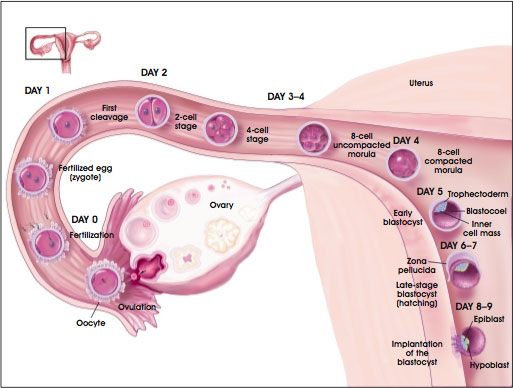
When does life begin?
The debate now is when does life begin? During fertilization or implantation?
When IUD is used and placed in the uterus, it alters the uterine lining and makes the uterus not suitable for implantation, Golez said.
"Di siya ma-implant sa uterus, nasira ang fertilized egg, abortifacient di ba?” he explained.
Pills may also be abortifacient, according to the lawmaker.
Pills have 3 modes of actions – prevent ovulation, thicken cervical mucus, and alter uterine lining.
The first 2 actions are not abortifacient but the third action is, according to Golez.
"Pills have a failure rate of less than 10%, kahit uminom ka ng pills, may chance na mag-ovulate ka pa rin,” said Golez.
For Golez, life begins during fertilization. "That's my stand as a Catholic doctor."
RH bills do not legalize abortion
Hontiveros-Baraquel, meanwhile, clarified that the RH bills in Congress do not legalize abortion. "Nananatili syang krimen".
She insisted that modern methods of family planning are not abortifacient. "We want to give couples a choice, kung natural or modern".
Golez, however, wants the government to first answer the question: When does life begin?
Golez said under the constitution, the state must protect life at the moment of conception. "Kailan ba nabubuhay ang isang tao? Define when life begins. Pag na-define natin yan, tsaka natin pag-usapan ang RH bill."
However, Hontiveros-Baraquel said, "Matagal ng dine-debate yan, centuries na yan. In the meantime, mahigit 18 years na pinag-uusapan ang RH bill. Masyado nang delayed. Bigyan natin ng choice ang tao."
Bacani, meanwhile, said that the church is not against reproductive health bills because they agree with the objectives.
"Hindi yung buong RH bill ang abortifacient. Don't get us wrong, the church is for responsible parenthood and family planning."
Subscribe to:
Comments (Atom)