The Philippine Daily Inquirer on August 3, 2008, published two articles at “Talk of the Town” written by Albay Rep. Edcel Lagman, principal author of the proposed Reproductive Health and Population Development Act of 2008. Lagman’s first article highlighted the main features of the measure, while his second noted the campaign to discredit it, both of which are at this blog for easy reference. On August 16, 2008 “Talk of the Town” published two articles, one Kit Tatad and another from Jo Imbong. Other contradictory responses coming from Fr. Virgilio Delfin, Pet Palma Dureza, Maria Concepcion S. Noche, Jose Fernandez and Minyong OrdoƱez did not see print because of limited space.

The Bagman is a dyed-in-the-wool opponent of the RH Bill and believes that there is a need to consolidate the voice of those who oppose its legislation.

The following wrote opinions against the RH Bill. Click on the name to read the article.

Saturday, January 22, 2011

What a Woman Should Know about Birth Control


All methods of birth control are efforts to separate sexual intercourse from procreation. This separation supports sexual relationships that are much weaker than traditional marriage—hooking up, cohabitation, adultery, and serial monogamy. These relationships erode society by leading to divorce, unexpected pregnancy, abortion, single parent households, abuse, and poverty. The consequences of birth control clearly demonstrate an unhealthy, anti-culture and anti-life, impact that raises major ethical concerns. Use of birth control is like intentionally eating unhealthy, nutrition-less, food just for the pleasure of eating. A steady diet will kill you. In much the same way, a steady diet of birth control kills relationships.


“The Pill”
The birth control pill is used by over 10 million women in the US and about 4 million of those are under age 25.The Pill consists of a combination of two types of artificial hormones called estrogens and progestins. It works by inhibiting ovulation and sperm transport and by changing the lining of the inside of a woman’s uterus (called the endometrium) so that if the woman does conceive she may have an early abortion.

Ethical concerns: It is estimated that a sexually active woman will experience at least one very early abortion every year that she is on the Pill. Both pro-abortion and pro-life groups acknowledge that the Pill causes early abortions.

Medical side effects: The birth control pill increases the risk of breast cancer by over 40% if it is taken before a woman delivers her first baby.  This risk increases by 70% if the Pill is used for four or more years before the woman’s first child is born.  Other side effects that women have experienced include high blood pressure, blood clots, stroke, heart attack, depression, weight gain, and migraines. Diabetics who take oral contraceptives may note increased sugar levels. Some women who stop taking the Pill do not have a return of their fertility (menstrual cycles) for a year, or even longer. Although the Pill decreases ovarian and some uterine cancers, it increases breast, liver, and cervical cancer.  At least three studies have noted that the AIDS virus is transmitted more easily to women who are taking the Pill if their partner(s) have the HIV virus.


“The Shot” and Norplant
Commonly known as “the shot,” Depo-Provera, a long acting progestin hormone, is injected into a woman’s muscle every three months. It works by decreasing ovulation, by inhibiting sperm transport and by changing the lining of a woman’s uterus. Norplant is another progestin in silastic (rubber-like) tubes that are placed under her skin, and left there for up to five years.

Ethical concerns: By changing the lining of the uterus, Norplant and Depo-Provera both can cause an early abortion when conception does occur. Women who use Norplant will probably experience more than one such abortion each year since the average woman ovulates in more than 40% of her cycles while using Norplant.  Depo-Provera may theoretically cause just as many abortions as Norplant since it is also a type of progestin.

Medical side effects: The results of two major world studies have shown that women who take Depo-Provera for two years or more before age 25 have at least a 190% increased risk of developing breast cancer.  In addition, Depo-Provera may reduce a woman’s bone density, and worsen her cholesterol level. One study found that women who had received injectable progestins (i.e., usually Depo-Provera or norethisterone enanthate) for at least five years suffered a 430% increased risk of developing cervical cancer.  Several studies have shown that women who receive injectable progestins have a much higher rate of contracting the AIDS virus if their partner is infected, with one study showing a 240% increased risk.  Norplant, which was developed later than Depo-Provera, has received less scrutiny, but may carry just as high a risk as Depo-Provera. Over 50,000 women have participated in law suits against the manufacturer of Norplant, citing complaints of irregular bleeding, scarring, muscle pain, and headaches.


Other Hormonal Contraceptives
The same artificial hormones used in the Pill, Depo-Provera, and Norplant are packaged in a variety of other delivery systems: the Patch, the “Morning after Pill,” the monthly injection Lunelle, hormone impregnated IUDs and vaginal inserts, and others. More are in development. Most are so new that their side effects have not been well researched. They use the same chemicals as the Pill and can be expected to have generally the same effects. All the hormonal contraceptives can also cause extended periods of unintended infertility after they are discontinued.

Barrier Methods:
 

The Condom and the Diaphragm
The condom has a failure rate that is estimated to be between 10-30%. There are several reasons: breakage or slippage during use, manufacturing defects, and defects caused by shipping and storage in a hot or very cold place.

Medical side effects: The condom does not adequately stop the transmission of the AIDS virus. CM Rowland, PhD, editor of Rubber Chemistry and Technology, tells us that electron micrographs (pictures taken with a very powerful microscope) reveal voids (holes) in the condom that are up to 50 times bigger than the HIV particle.


The diaphragm is a barrier method of birth control so it theoretically does not cause early abortion. At least one study has noted that women who use barrier methods such as the diaphragm or condom, or the withdrawal method, had a 137% increased risk of developing preeclampsia.  Preeclampsia, a complication occurring in some pregnant women, is a syndrome of high blood pressure, fluid retention, and kidney damage, which may eventually lead to prolonged seizures and/or coma. It is theorized that exposure to the male’s sperm plays a protective role against preeclampsia.

Spermicides
A spermicide is an agent that is designed to kill the man’s sperm and is often sold as a gel or as an ingredient in the vaginal sponge. Toxic Shock Syndrome has been associated with the spermicide sponge.  One researcher has noted that couples who have used certain spermicides within a month of conception have experienced a doubling in the rate of birth defects, as well as a doubling of the rate of miscarriage.

The IUD (Intrauterine Device)
This is a T-shaped device made of hard plastic. It may also contain copper or contraceptive hormones. A doctor inserts it into a woman’s uterus. It works by irritating the lining of the uterus and obstructing sperm transport.

Ethical concerns: When conception occurs with an IUD in place, the IUD can prevent implantation, or destroy the new embryo by copper poisoning or by attack from the body’s immune system, thus causing an early abortion.

Medical side effects: These include uterine perforation, which may lead to a hysterectomy, and infection, such as a pelvic or tubo-ovarian abscess. Use of all IUDs has been associated with an increased incidence of PID (Pelvic Inflammatory Disease) and of ectopic pregnancy.  An ectopic pregnancy is one in which the unborn child implants himself/ herself in a location other than in the mother’s uterus, usually in the fallopian tube. According to Rossing and Daling, two prominent researchers, women who had used an IUD for three or more years were more than twice as likely to have a tubal pregnancy as women who had never used an IUD. Among these long-term users of an IUD, risk of ectopic pregnancy remained elevated for many years after the device was removed. Ectopic pregnancy remains the leading cause of maternal death in the United States. The IUD may also cause back aches, cramping, dyspareunia (painful intercourse), dysmenorrhea (painful menstrual cycles), and infertility.

“Permanent” Sterilization:

Tubal Ligation and Vasectomy

Surgical sterilization attempts to achieve permanent sterility through closing a woman’s fallopian tubes (called “tubal ligation”) or a man’s vas deferens (called “vasectomy”) by tying the tube closed and in some cases by cutting, burning, or removing part of the tube.

Medical side effects: Tubal ligation does not always prevent conception. When conception does occur, it is associated with a much higher incidence of ectopic pregnancy, which, as was noted, is the leading cause of death in pregnant women. In addition, women who undergo the procedure may experience complications from the anesthesia or from surgery. Complications include bladder puncture, bleeding, and even cardiac arrest after inflation of the abdomen with carbon dioxide.  Some women who have undergone a tubal ligation experience a syndrome of intermittent vaginal bleeding associated with severe cramping pain in the lower abdomen.  Reduced intimacy, lower libido, and a greater risk for hysterectomy often follow tubal ligation; deep regret for having been sterilized is common.

About 50% of men who undergo a vasectomy will develop anti-sperm antibodies.   In essence, their bodies will come to recognize their own sperm as “the enemy.” This could lead to a higher incidence of autoimmune disease. Several studies have noted that men who undergo a vasectomy have a higher incidence of developing prostate cancer, especially 15-20 years after their vasectomy,  although one large study did not find a link.

Wise Options
The best option before marriage is abstinence. The obvious benefits include greater self-respect, freedom from the risk of venereal disease, as well as monetary savings and no chance of a surprise pregnancy.

Within marriage it should be noted that an openness towards having children yields specific medical benefits. Every additional child a woman bears reduces her risk of breast cancer, some uterine cancers, and ovarian cancer.

NFP: Natural Family Planning
Natural Family Planning is a totally natural method by which couples can manage their fertility. In NFP a woman determines when she is either fertile or infertile by observing the consistency of her cervical mucus. The WHO (World Health Organization) has performed several large-scale trials that have demonstrated an unintended pregnancy rate of between 0.3 and 3%, which is as good as any artificial form of birth control except sterilization. One very large trial involving about 20,000 Indian women showed an unintended pregnancy rate of less than 0.3%.

Some obvious benefits of NFP are that it is virtually cost-free and there is no increased risk of cancer. Couples who use NFP have a divorce rate that is less than 5% far lower than the national rate of about 50%.

Wednesday, January 12, 2011

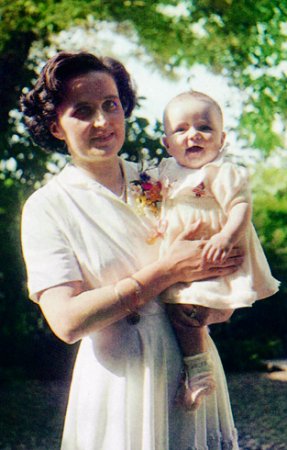
Gianna Beretta Molla (1922-1962)

Gianna Beretta was born in Magenta (Milan) October 4, 1922. Already as a youth she willingly accepted the gift of faith and the clearly Christian education that she received from her excellent parents. As a result, she experienced life as a marvellous gift from God, had a strong faith in Providence and was convinced of the necessity and effectiveness of prayer.

 She diligently dedicated herself to studies during the years of her secondary and university education, while, at the same time, applying her faith through generous apostolic service among the youth of Catholic Action and charitable work among the elderly and needy as a member of the St. Vincent de Paul Society. After earning degrees in Medicine and Surgery from the University of Pavia in 1949, she opened a medical clinic in Mesero (near Magenta) in 1950. She specialized in Pediatrics at the University of Milan in 1952 and there after gave special attention to mothers, babies, the elderly and poor.

While working in the field of medicine-which she considered a “mission” and practiced as such-she increased her generous service to Catholic Action, especially among the “very young” and, at the same time, expressed her joie de vivre and love of creation through skiing and mountaineering. Through her prayers and those of others, she reflected upon her vocation, which she also considered a gift from God. Having chosen the vocation of marriage, she embraced it with complete enthusiasm and wholly dedicated herself “to forming a truly Christian family”.

She became engaged to Pietro Molla and was radiant with joy and happiness during the time of their engagement, for which she thanked and praised the Lord. They were married on September 24, 1955, in the Basilica of St. Martin in Magenta, and she became a happy wife. In November 1956, to her great joy, she became the mother of Pierluigi, in December 1957 of Mariolina; in July 1959 of Laura. With simplicity and equilibrium she harmonized the demands of mother, wife, doctor and her passion for life.

In September 1961 towards the end of the second month of pregnancy, she was touched by suffering and the mystery of pain; she had developed a fibroma in her uterus. Before the required surgical operation, and conscious of the risk that her continued pregnancy brought, she pleaded with the surgeon to save the life of the child she was carrying, and entrusted herself to prayer and Providence. The life was saved, for which she thanked the Lord. She spent the seven months remaining until the birth of the child in incomparable strength of spirit and unrelenting dedication to her tasks as mother and doctor. She worried that the baby in her womb might be born in pain, and she asked God to prevent that.

A few days before the child was due, although trusting as always in Providence, she was ready to give her life in order to save that of her child: “If you must decided between me and the child, do not hesitate: choose the child - I insist on it. Save him”. On the morning of April 21, 1962, Gianna Emanuela was born. Despite all efforts and treatments to save both of them, on the morning of April 28, amid unspeakable pain and after repeated exclamations of “Jesus, I love you. Jesus, I love you," the mother died. She was 39 years old. Her funeral was an occasion of profound grief, faith and prayer. The Servant of God lies in the cemetery of Mesero (4 km from Magenta).

“Conscious immolation", was the phrase used by Pope Paul VI to define the act of Blessed Gianna, remembering her at the Sunday Angelus of September 23, 1973, as: “A young mother from the diocese of Milan, who, to give life to her daughter, sacrificed her own, with conscious immolation”. The Holy Father in these words clearly refers to Christ on Calvary and in the Eucharist.

Gianna was beatified by Pope John Paul II on April 24, 1994, during the international Year of the Family.

Sunday, January 2, 2011

Increasing Populations in Developing Countries Threaten U.S. Interests


Here is an article dated April 2, 2002 from the archives of The Interim (Canada’s Life and Family Newspaper).


Nobel winner supported biological warfare as form of population control
Third World de-population has been U.S. strategic policy since '74


Top-secret files recently declassified from the National Archives of Australia, despite government opposition, has revealed that one of the fathers of modern biotechnology and genetic engineering advocated using biological weapons against Indonesia and other "overpopulated" countries of South-East Asia. Australia's The Age reports that world-famous microbiologist Sir Macfarlane Burnet recommended in a secret report for the Australian Defence Department in 1947 that biological and chemical weapons should be developed to target food crops and spread infectious diseases. 

Macfarlane, who won the Nobel Prize for medicine in 1960 and died in 1985, said, "Specifically to the Australian situation, the most effective counter-offensive to threatened invasion by overpopulated Asiatic countries would be directed towards the destruction by biological or chemical means of tropical food crops and the dissemination of infectious disease capable of spreading in tropical, but not under Australian, conditions." 

Before a government committee in 1948, Macfarlane said, "In a country of low sanitation the introduction of an exotic intestinal pathogen, e.g. by water contamination, might initiate widespread dissemination." He advised that, "Introduction of yellow fever into a country with appropriate mosquito vectors might build up into a disabling epidemic before control measures were established." The committee recommended that "the possibilities of an attack on the food supplies of S-E Asia and Indonesia using biowarfare agents should be considered by a small study group".

Outlining the benefits of the population elimination program, Macfarlane said, "Its use has the tremendous advantage of not destroying the enemy's industrial potential, which can then be taken over intact." While the idea of depopulation by chemical means for strategic purposes may seem outrageous, other strategic de-population policies are currently being practised throughout the world under the cover of population control. 

The official policy of the U.S. regarding population control in foreign policy is spelled out in U.S. National Security Study Memorandum 200 (NSSM 200), written by Henry Kissinger. NSSM 200, subtitled "Implications of Worldwide Population Growth for U.S. Security and Overseas Interests," warned that increasing populations in developing countries threatened U.S. strategic, economic, and military interests. It suggested that competition from new world powers would rise when developing nations had sufficient populations to utilize their national resources to their full potential. 

Thus in order to ensure U.S. strategic, economic, and military interest, at the expense of developing countries, it proposed population control to address potential population growth and specifically targeted 13 countries whose growing populations suggested coming power. The report spelled out a plan to bring about "a two-child family on the average" throughout the world "by about the year 2000." Interestingly, NSSM 200 went into detail about avoiding U.S. responsibility for population-control programs by ensuring that the UN and international financial institutions such as the IMF and World Bank adopt population-control policies as prerequisites to their giving of aid. The report suggested furthering the camouflage by mandating that countries accepting aid from the UN or the banks form their own population-control ministries. 

NSSM 200 also noted that the U.S. government played "an important role in establishing the United Nations Fund for Population Activities to spearhead a multilateral effort in population as a complement to the bilateral actions of AID and other donor countries." It added that "with a greater commitment of bank resources and improved consultation with AID and UNFPA, a much greater dent could be made on the overall problem." Moreover, the report asserts that "mandatory programs may be needed and that we should be considering these possibilities now." 

It remains to be seen whether the Bush administration will be the first since 1974 to officially repudiate the official U.S. government policy to reduce Third World population.

Monday, November 29, 2010

Freedom of conscience

By Fr. Emeterio Barcelon, SJ

Why is the Church so interested in the RH Bill, a subject where priests are probably the least knowledgeable? The answer is conscience. The bishops and priests may not know as much as others do about sex and marriage but the question here is freedom of conscience. Are the proposals in the RH bills forcing the poor to submit to practices that go against their conscience? Are the medical workers to be forced to assist in abortion otherwise suffer consequences? The stipulations of the final bill are still anybody's guess. The caution is to make sure we do not trample on people's conscience.

Pres. Nonoy Aquino is not interested in destroying anybody's conscience. He wants to help those burdened with too many children. All he wants is responsible parenthood. Those who cannot abstain should learn licit ways to space birth. The government would help give proper information without pushing for any method of birth spacing. The couples have to decide for themselves. The government should not promote any system that would be against the conscience of the participant. The government should propagate information on natural family planning and other licit methods.

The Church has never had the policy of promoting over-population. The problem is poverty plus ignorance. (We have birth control promoters, especially foreigners who do not want to share the earth with the poor. As we have in the Kissinger memo that makes it US policy to cut population by whatever means. If it destroys the conscience of the poor in underdeveloped countries that should not stop population control because there are too many people on this earth and life should be enjoyed only by the rich and educated. Why should the earth be shared with the backward peoples? There are also those who profit on chemicals but not on teaching natural birth spacing who rail against the church for cutting their profits.)

Responsible parenthood is not an essential of our faith. Its forms are subject to change. But freedom of conscience is an essential of Faith. Man will be rewarded by the Creator for the good that he does and punished for the evil he has done. And therefore his freedom of choice according to his subjective conscience must remain inviolate. Freedom is the most precious gift man has. It is greater than life itself. Many have given up life to protect this fundamental freedom to accept or reject God. All other freedoms exist only to support this fundamental freedom: to accept or not to accept God or to do or not to do His will. What His will is can sometimes be unclear and may take a lot of effort to ferret out. But that is the only purpose of man, namely, to exercise his freedom to accept God.

We will be judged by the Almighty according to our subjective conscience. In moral theology, if a person thinks that two sticks form a cross and it is a sin to step on it and he does step on it, he violates his conscience and will be punished for it. If a can nibal thinks it is right to eat another human being and he feasts on one, he will be rewarded for doing what he thinks is right, although objectively it is wrong. What is left to do is to educate the individual to a right conscience of what is right and what is wrong. This can be affected heavily by the culture in which a man lives and the education that he gets. In the end, it is a question of justice, namely, to give to others what is their due. Give to God what is due to God and to fellow man what is due to him. Put in other words, it is to love God above all things and to love our neighbor as ourselves. All other things of justice and morality end up in this. But in the weakness or perversion of man, he sometimes goes against his conscience or hides behind legalities. Are we really giving justice to the poor and protecting his freedom or hiding behind trappings of law?

Thursday, November 25, 2010

When does life begin? RH debate rages

By NiƱa Corpuz


When does life begin?

Bacolod Rep. Anthony Golez Jr. tried to answer this question Wednesday at the Talakayan sa Bayan debates on the reproductive health (RH) issue at the Unibersidad ng Maynila.

Golez, who is also a doctor of medicine, is against the RH bills in Congress.

He is on the side of the Catholic Church and Bishop Emeritus of Novaliches Teodoro Bacani, who also attended the forum.

Former Akbayan Rep. Rissa Hontiveros-Baraquel was on the other side of the fence at the debate.

'Pills are abortifacents'

Golez gave a presentation on why modern contraceptives like pills and intrauterine devices are abortifacients or cause abortions. 

He believes that life begins at fertilization, the same view as the Catholic Church as expressed by Bacani.

Golez said that he is not against the objectives of the RH bills, such as for parents to have the opportunity to plan the spacing of their children, and promoting infant and maternal health,

"Pero ang hindi sinasabi ng RH bill ay ang ibinibigay na serbisyo dito ay abortifacient,” he added.

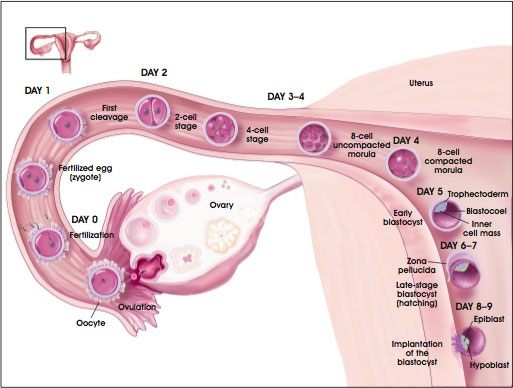
Using a picture of a woman's reproductive organs, Golez said life begins during fertilization. He said this is when the egg and sperm meet in the ovary. After 6 or 7 days, the fertilized egg will travel to the uterus where it will be implanted.


When does life begin?

The debate now is when does life begin? During fertilization or implantation?

When IUD is used and placed in the uterus, it alters the uterine lining and makes the uterus not suitable for implantation, Golez said.

"Di siya ma-implant sa uterus, nasira ang fertilized egg, abortifacient di ba?” he explained.

Pills may also be abortifacient, according to the lawmaker.

Pills have 3 modes of actions – prevent ovulation, thicken cervical mucus, and alter uterine lining.

The first 2 actions are not abortifacient but the third action is, according to Golez.

"Pills have a failure rate of less than 10%, kahit uminom ka ng pills, may chance na mag-ovulate ka pa rin,” said Golez.

For Golez, life begins during fertilization. "That's my stand as a Catholic doctor."

RH bills do not legalize abortion

Hontiveros-Baraquel, meanwhile, clarified that the RH bills in Congress do not legalize abortion. "Nananatili syang krimen".

She insisted that modern methods of family planning are not abortifacient. "We want to give couples a choice, kung natural or modern".

Golez, however, wants the government to first answer the question: When does life begin?

Golez said under the constitution, the state must protect life at the moment of conception.  "Kailan ba nabubuhay ang isang tao? Define when life begins. Pag na-define natin yan, tsaka natin pag-usapan ang RH bill."

However, Hontiveros-Baraquel said, "Matagal ng dine-debate yan, centuries na yan. In the meantime, mahigit 18 years na pinag-uusapan ang RH bill. Masyado nang delayed. Bigyan natin ng choice ang tao."

Bacani, meanwhile, said that the church is not against reproductive health bills because they agree with the objectives.

"Hindi yung buong RH bill ang abortifacient. Don't get us wrong, the church is for responsible parenthood and family planning."

Thursday, October 28, 2010

Population Bogey: a scapegoat

By Sonny Coloma
Business World, 3 October 2008


In the fifties and up to the time martial rule was imposed by a dictatorial President, the
communist bogey was the favorite justification for witch-hunting against advocates of
progressive thought who were accused of "destabilizing" the government and "threatening
our democratic way of life." Today, the communist bogey has been replaced by a new
scapegoat: the population bogey.

House Bill 5043, otherwise known as the Population and Reproductive Health Bill, is now
being debated. Even if the bill has not been passed it has been reported that about  P2 billion has been appropriated to fund the purchase and provision of contraceptives that will be distributed in health centers nationwide.

I first became aware of the population bogey when, as a freshman in UP, I read the winning piece for the Philippine Collegian editorship written by Antonio Tagamolila. (Government soldiers in the coutnryside killed Tony Tagamolila in the early seventies, not long after his stint as Collegian editor.) His lead sentence was quite memorable: “The ghost of the Parson Malthus once more stalks the land.”


Thomas Malthus was a Protestant minister who warned about the potentially catastrophic
consequences of “geometric” (or “exponential”) population growth far outstripping “arithmetic” growth in food production. This view found resonance in the Club of Rome’s
exposition on the Limits to Growth in the mid-seventies.

But such gloom-and-doom scenarios have not materialized. Advances in technology have greatly enhanced human productivity. The market economy has created such an abundance of wealth that, even if not equitably distributed, has forestalled the dire predictions on the supposed detrimental effects of the law of diminishing marginal returns.

Poverty cannot be totally blamed on the poor themselves: it is more clearly the outcome of
human greed and bad governance. In the Real Wealth of Nations, Riane Eisler points out that  it is dominator economic systems that “artificially create and perpetuate scarcity – and with this, pain and fear.” Such systems have spawned “heavy investment in armaments, lack of
investment in meeting human needs, ruthless exploitation of nature, and waste of natural and human resources from wars and other forms of violence.”
 

In our country, the Catholic Church has often been blamed by politicians for the continuing high population growth rate. I recall that during the Ramos regime, Cardinal Sin mobilized a huge rally in Luneta to counteract the high-profile birth control program of the Department of Health that was then headed by flamboyant Secretary (later Senator) Juan Flavier.

During my two stints in government, I have realized why every secretary of health is bound
to support the use of contraceptives in population control programs. Almost the entire DOH
budget (up to 80%) is allocated for personnel salaries and administrative expenses. Only
official development assistance from such sources as the US Agency for International
Development (USAID) makes it possible for the DOH to pursue meaningful pubic health
programs.

I am opposed to HB 5043 even if I favor planned parenthood through natural methods. My
opposition stems from the fact that, historically, the open tolerance of the use of
contraceptives has produced more harmful effects than the good that its advocates have
vowed to promote.

A culture of contraception is, essentially, an anti-life – not a pro-choice — culture. It is also
anti-family.

Contrary to expectations, the percentage of out-of wedlock births has increased dramatically since oral contraceptives, or birth control pills, were approved for sale in 1960. In the US out-of-wedlock births have increased from 6% to about 35%. In Europe, about half of the children in Denmark, Sweden, and Norway are born to unmarried mothers.

These figures give rise to the query: since birth control pills prevent pregnancy, shouldn’t
the out-of-wedlock pregnancy rates have gone down? Not so, because of the operation of the law of unintended consequences. Since contraception has become legitimate, then child-bearing can take place outside marriage. Hence, there has been a big increase in the out-of-wedlock pregnancies – and births – and of abortions as well. With few exceptions, abortions always happen outside of marriage.

Another consequence of the onset of the culture of contraception is the spiral in the incidence of divorce and a corresponding decline of marriage as an institution.

Let the authors of the House Bill explain and justify to the people the rationale in terms of the foregoing challenges: the likely increase in unwanted pregnancies and criminal abortions,
out-of-wedlock births, and the decline of marriage. Let them file a divorce law to complete
their menu for the new Filipino lifestyle.

But let the silent majority of those who are opposed to abortion and the decline of the family
as an institution also speak up.

 
Not surprisingly, none of the presidential wannabees for 2010 has spoken in favor of HB
5043, which still needs a Senate counterpart measure that is yet to be reported out and
debated on the floor.

Catholics should come out in the open and ask their senators, congressmen, and political
leaders to declare where they stand on this issue.

Monday, October 25, 2010

Falsehoods in the Lagman Bill

By Emil Jurado

At the Congress Night of the Manila Overseas Press Club, when Speaker Prospero Nograles was asked what he thought of the Reproductive Health bill of Bicol Rep. Edcel Lagman, the Speaker gave the floor to Lagman, who perorated on his bill espousing contraception to control population growth and the need for the people to be aware of their choices in planning their families.

The premise of the highly debated proposed Reproductive Health and Population Development Act of 2008, according to Lagman, is that the booming population has worsened poverty. He anchored his contraception bill on the findings of some 29 UP economists, who claimed that population growth over the years would worsen poverty unless population is contained. Ergo, contraception is the answer.

Lagman seems to put too much weight on what UP economists say. He forgets that economists make conclusions on assumptions and other factors, which are not validated, much less proven. Show me an economist that has become a billionaire because of assumptions and conclusions, and I’ll show you a pig that can fly.

At the risk of repeating myself, there’s no empirical data that shows that overpopulation causes poverty. Poverty is the result of confluence of factors, like bad governance, graft and corruption (benefits don’t go to the bulk of the populace, but to the pockets of grafters and corrupt public officials) and unmitigated migration from the provinces to urban areas. The existence of squatter colonies in Metro Manila attests to this.

The flawed premise of Lagman’s bill is in empirical data like figures from the National Statistics Office, which show that our population growth rate is 2.04 percent, and total fertility rate is 3.02 percent. The CIA World Fact Book has lower figures of growth rate, 1.728 percent; TFR, 3.00 percent. Our population density is 277 per square km. gross domestic product per capita is $3.400.  According to a study made by former Senator Kit Tatad, 50 other countries have a much lower density, yet their per capita is much lower. Thirty six countries, Tatad stated, are more densely populated, yet their GDP per capita is also much higher. Kit asked: Are the few then always richer, the many always poorer? Not at all.

Empirical data also show our median age is 23 years. In 139 other countries, it is as high as 45.5 years (Monaco). This means a Filipino has more productive years ahead of him than his counterpart in the rich countries where the graying and dying population is no longer being replaced because of negative birth rates.

Lagman and his anti-life lobbyists must be told that the city-state of Singapore is now in full reverse after undertaking a policy of population control. The Singapore government is in fact encouraging couples to marry and even providing incentives. There’s a joke in the welfare state of Finland that’s controlling its population growth that by 2050, there will only be two Finns left, and that they don’t know whether or not they will be of opposite sexes.

Santa Banana, Lagman’s bill is not only jurassic and archaic, but against empirical data! It’s fraught with lies and fallacies!

PHOTO: immigrant family from China  in Singapore circa 1958, from Elaine Sng.